
Black Forest Ham: Traditional Smoking & Aroma
Discover authentic Black Forest ham: Cold-smoked over fir brush, mildly cured, aromatic and unmistakable as an EU-protected specialty.
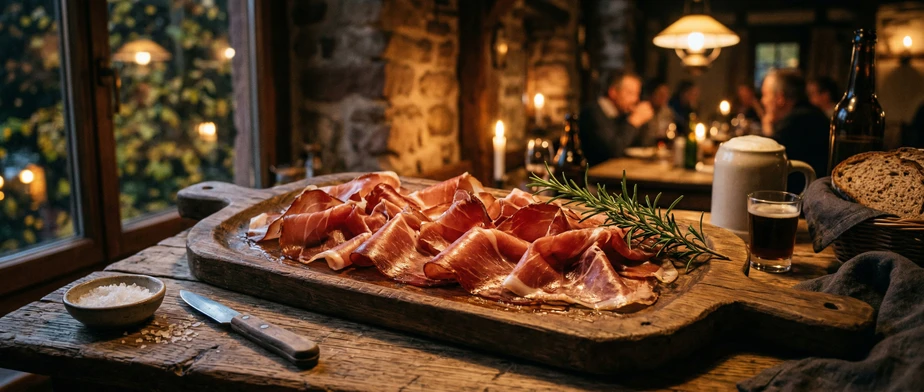
Far beyond the borders of the Black Forest, the popular Black Forest ham is renowned and is the best-selling ham in Europe.
Black Forest ham is a boneless, mildly cured and smoked raw ham. This specialty has been produced for centuries using a traditional process. Curing and smoking over fir brush preserves the meat and also gives this ham its unmistakable aroma and red colour.
Smoking does not only ensure excellent shelf life for this specialty. It has also made it very popular among gourmets at home and abroad. Black Forest ham is known for its natural and robust smoky aroma. The appealing part is that this indulgence remains affordable for many people.
The name “Black Forest ham” has been a geographically protected designation under EU law for 25 years. To fall under this protection, curing and smoking must take place in the Black Forest. This refers in the broadest sense to the area between Pforzheim and Lörrach. Other production steps such as animal husbandry, slaughter and cutting of the raw ham can be carried out outside the Black Forest. The “Association for the Protection of Black Forest Ham Producers” was founded in 1989 and has since worked to ensure consistently high quality of the raw ham.
A proven preservation method
For raw ham, smoking is usually chosen as the method of preservation. The smoke keeps Black Forest ham fresh for a long time due to its components and the reduction of the water content. Smoking has been a proven method for thousands of years to preserve ham, sausage, meat and fish. During smoking, moisture is removed from the product and bacteria, yeasts and moulds are killed. This also significantly increases the shelf life of Black Forest ham, since microorganisms no longer find a suitable environment.
In classic smoking, the product is first salted and cured and then hung in a smokehouse over smouldering wood. Phenols and around 300 other substances in the smoke cause the protein in the raw ham to set and also change the smell and taste of the ham. This flavour is intense and easily recognisable.
Warm and hot smoking
In warm and hot smoking, cooked ham, sausages and whole fish are smoked for a few hours and then keep for only a few days. Smoking usually takes place over smouldering beech wood chips or beech sawdust. In warm smoking, temperatures of up to about 60 °C are reached. Hot smoking refers to temperatures between roughly 70 and 100 °C.
Cold smoking
Cold-smoked ham such as Black Forest ham and other smoked foods such as smoked salmon or bacon are smoked at temperatures below 25 °C. Through cold smoking, these foods keep for several weeks or even months. Hardwood is suitable as a smoking material for cold smoking, as is fir brush as used for Black Forest ham. In cold smoking, longer smoking phases alternate with resting phases. The entire smoking process lasts several days.
Production of Black Forest ham
The method of preserving food by smoking has been known for around 9,000 years and is used in many parts of the world. Since the settlement of the Black Forest, food has also been preserved in this way. One widely known specialty from the Black Forest is cold-smoked ham, which is a boneless raw ham.
Black Forest ham is first dry-cured. The duration of curing depends on the size of the cuts of meat. The ham is then rubbed with the individual spice blends of each producer. After being rubbed with spices, the ham is stacked in special containers so that meat juices are released and collect as brine.
After several weeks in the salt brine, the ham is stored in a dry environment. This allows the salt to work from the outside in. The ham is then smoked for at least one week at 20 to 30 °C. Coniferous wood from the Black Forest is used for smoking. The type, quantity and composition of the coniferous wood used also play an important role in shaping the aroma.
After cold smoking, Black Forest ham must mature for a further two months at around 5 °C to develop its typical aroma. This is a special quality feature of the ham. By the end of the maturing process, the ham has lost 25 percent of its original weight due to moisture loss and has developed its full flavour.
Spice blends for the typical aroma
The composition of the spice blends and the dosage of the ingredients have been passed down through generations and are a closely guarded secret in each business.
The curing salt and the spice blends, which can vary from producer to producer, are another hallmark of these quality products. In addition to curing salt, they may contain garlic, coriander, pepper and juniper berries, for example. In Black Forest ham, these ingredients give each product its individual flavour profile and its characteristic colour.
Origin of the pork legs
Black Forest ham is a boneless raw ham made from the outside round of the pig. The pigs do not have to come from the Black Forest, since the high demand could hardly be met in that case. Around 10 percent of the pork legs come from Baden-Württemberg and about 70 percent from the rest of Germany. The remaining 20 percent of the pigs come from other EU countries.
More articles
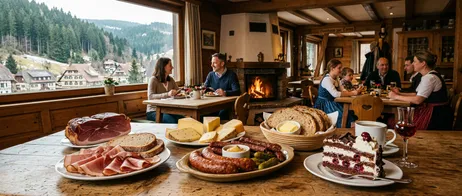
Enjoy Culinary Specialties from the Black Forest
The Black Forest delights visitors with ham, cherry cake, regional dishes and traditional specialties full of flavor and a sense of home.
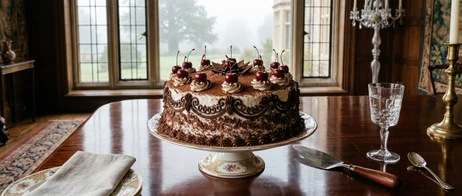
Black Forest Cake: History, Recipe and Enjoyment
Discover everything about Black Forest cake: history, recipe, kirsch, tradition and the annual Black Forest Cake Festival in the Black Forest region.
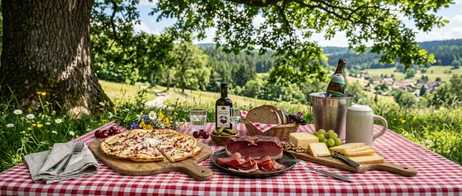
Black Forest Specialties: Cherry Cake, Ham & More
Discover the culinary highlights of the Black Forest: Black Forest cake, ham, kirsch, beer, tarte flambée and regional delicacies.
Autumn Holidays in the Black Forest: Colours and Relaxation
Experience the Black Forest in autumn: colourful forests, mushroom picking, hiking and cosy holiday homes for relaxing vacation days.
Culinary Holiday in the Black Forest: Enjoyment in a Holiday Home
Enjoy culinary highlights in the Black Forest. Holiday homes offer comfort, regional specialities and authentic moments of indulgence for every trip.
Sustainable travel cuts costs and boosts satisfaction
Discover how slow travel protects the environment and your budget. Practical tips for sustainable travel, regional accommodation and low-cost holiday planning.
